

Read that again. Culture eats your performance for lunch, too. Your company's culture. Your family, state, or country's business and work cultures too.
It doesn’t matter how good you are. How strong your track record. How much you consistently bring to every room you walk into. A system that wasn’t designed for your success will still beat you — not usually in one decisive moment, but through a slow erosion of your resolve, your commitment, your self-belief, and eventually the part of you that still wants to show up and care.
Most of the career advice most of us absorbed came from people who meant well but were working from an older map — one drawn before the modern workplace was legally and financially restructured by the people with the most to gain from it. Lobbied frameworks were written. Incentive structures were engineered. Financial optimization strategies got refined. The result is a set of workplace practices that are, almost without exception, entirely legal — even when they’re not particularly ethical, and even when they’re designed specifically to look like something other than what they are.
Nobody handed you the updated manual. This post is that manual. Twenty structural patterns — documented, named, told straight — for what’s been happening inside every organization you’ve ever worked for. Once you can see the system clearly, a lot of things that used to feel like personal failures stop feeling that way.
And once you can see it clearly, something shifts that can’t be undone: nobody gets to make you own what was never yours to own.
Here’s what I also know about you, though. You’ll probably own it anyway. You’ll still look for the better solution, still carry the weight while you’re finding it, still bring everything you have to a system that wasn’t designed to give you credit for doing so. That part of you isn’t going anywhere — and honestly, it’s one of the things that makes you worth talking to. What changes is what you do with the rest of your energy. The part that’s been quietly disappearing into an environment that wasn’t built to give anything real back. That energy belongs somewhere it can actually compound into something that lasts — an environment where your effort, your judgment, and the weight you’re willing to carry actually make a real difference.
That’s what we’re building here. Welcome to the Best Job Ever Club. You’re a Career Architect.
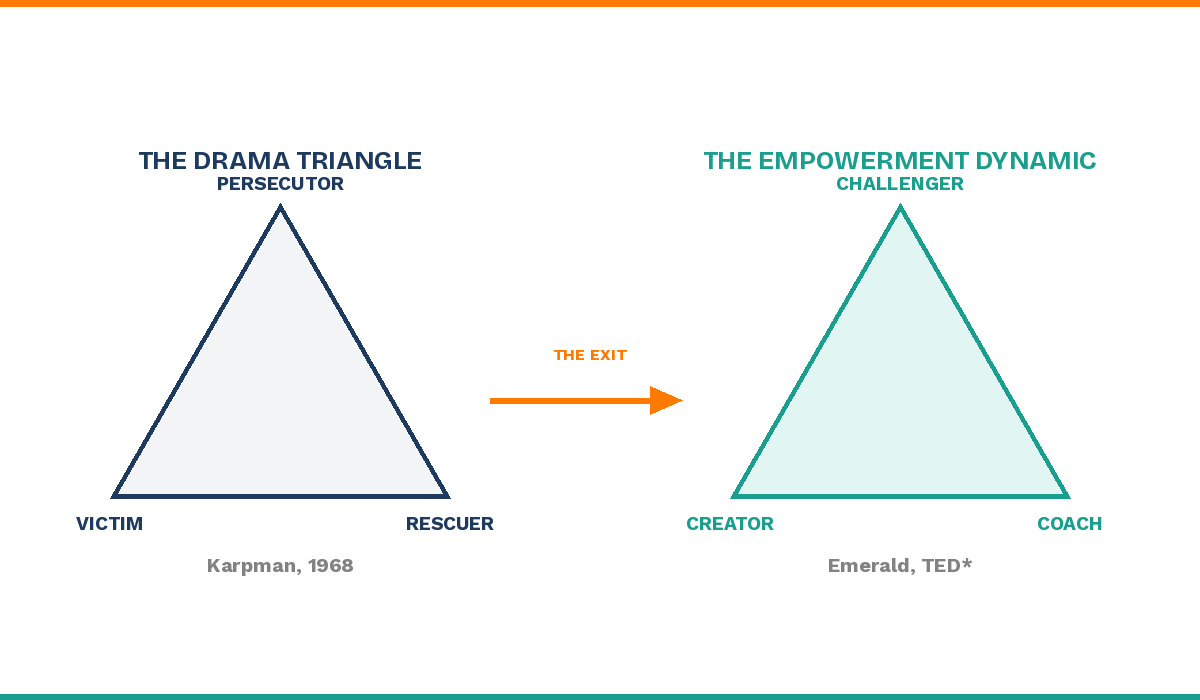
Each pattern below names who’s actually driving it and who absorbs the cost. Psychologist Stephen Karpman mapped dynamics like these back in 1968 with what’s now called the Drama Triangle — Persecutor, Victim, and Rescuer, roles people cycle through until someone finally steps out of them[2]. Under each pattern below, we name the Persecutor(s) when there really is one, and the Victim(s) — who, in a system built this asymmetrically, is almost always employees, sometimes joined by the very managers and executives enforcing it.
1. The Bozo Blind Spot
Almost nobody respects management or leadership as real skills
PERSECUTOR(S): Executives and boards who came up through non-management tracks — technical, sales, finance — and underfund or dismiss management training because they don't recognize what they never had.
VICTIM(S): Employees, and the managers who report to them, who never got real training either.
Most people study their trade. Almost nobody studies management or leadership. You get promoted for being good at the work, then you're handed a team with zero training in how to run one — and everyone acts surprised when it goes badly. That disrespect for management as a discipline isn't just a workplace problem. It's a career problem, because if you can't recognize good leadership, you can't build it in yourself, and you can't spot it — or its absence — in the next role you take.
It's what happens when a critical skill gets treated as something people should just "figure out" — often by executives who never studied it themselves, came up through a completely different function, and picked up their entire leadership philosophy from a highlight reel. A famous one: Steve Jobs, describing Apple's early attempt to bring in professional managers, said flatly that most of them "were bozos" who "knew how to manage, but didn't know how to do anything"[5][6]. It's a great story. It's also possible that the hiring decisions that put those particular bozos in charge were themselves made by bozos — and Apple eventually figured that out. Management and leadership are not optional at scale. Every successful organization has people who are genuinely skilled at both, Apple included, Jobs included, Musk's companies included. The problem was never that management is worthless. The problem is that almost nobody is trained to do it well, and almost nobody respects it enough to learn.
2. The Peter Principle
They don't know what they're doing. They're learning on you.
PERSECUTOR(S): Executives who eliminate integrator and coaching roles to cut cost, and an incentive structure that never asks a "working" manager to keep growing.
VICTIM(S): Employees reporting to an undertrained or plateaued manager.
Manager engagement and manager burnout are both rising right now[3][4]. That's not an accident, and it gets worse when the skill is actively cut rather than just neglected. Under pressure to "do more with less," organizations regularly eliminate the roles built specifically to integrate and coordinate people: middle managers, Scrum Masters and Agile Coaches in engineering, sales enablement in revenue teams, HR business partners who used to coach frontline managers directly. The result isn't leaner. It's a group of skilled individual contributors with nobody teaching them how to work as a team.
This is also the Peter Principle at work, just rarely named[7]: people get promoted based on how well they did the last job, not how well they'll do the next one, until eventually everyone lands in a role slightly past their actual skill. Some people learn fast enough to grow into it. Some can't, because the structure around them won't let them. And plenty never have to, because organizations don't touch what's already working, and people don't develop new skills without a reason to. The reason is almost always missing: when a manager or executive is quietly told "keep doing what you're doing," that's not encouragement. It's the absence of any incentive to get better. They don't know what they're doing. They're learning on you — and nobody above them is asking them to stop.
Return-to-office mandates are one of the clearest symptoms of this same gap. Competent management was never location-dependent — a manager who actually builds trust, sets clear expectations, and coaches performance gets those results whether the team sits in the same room or six time zones apart. When an executive falls back on forcing physical proximity instead, it's usually because proximity is the only lever they know how to pull. (See #9 for the other reason RTO happens — cost, not collaboration.) That's exactly the gap clients close in Aligned Leadership work: not by pretending management is easy, but by finally treating it as a real, practiced skill instead of something people are expected to absorb by osmosis.
3. The Org Chart Experiment
Your role is an experiment — and sometimes it fails
PERSECUTOR(S): Executives and the boards who approve their plans — people who design or back a structure without enough experience or certainty to know if it will hold, and who don't personally absorb the cost when it doesn't.
VICTIM(S): Employees, especially short-tenure ones caught in a structural correction.
The people above you on the org chart built that chart to hit a financial and operational goal. Often they're guessing. The newer the executive in charge, or the newer the team, or the newer the company, or the more complex the plan, or the newer the innovation they're chasing — the more likely that structure is an experiment rather than a proven model. Your box on that chart — and you, in it — can be part of an experiment that just doesn't work out.
I've lived this more than once: capable people with short tenures who did nothing wrong got laid off anyway, caught up in a structural correction, while a manager with more tenure and more insider standing got retained even though the underlying plan was the actual problem. If that happens to you, the honest, business-driven explanation — the product finally launched and the company scaled back the investment to shift the team into production support, or an acquisition finished integrating and the extra people hired just for that integration project were no longer needed — is usually more accurate than the story some future interviewer might try to tell about you: that you "weren't even there a year." Over 200,000 workers have been affected by layoff events in 2026 alone[8][9], most of them tied not to individual failure but to a structure that got redrawn. Do your best work. But always keep a backup plan, a system, and the confidence to go get another job on your own timeline, not someone else's.
4. The Invisible Owner
The most important person in the company is someone you may never meet
PERSECUTOR(S): Founders, investors, board members, and the executives who act on their behalf.
VICTIM(S): Employees.
A lot of people say "management is a bunch of idiots." I've said it myself. But ask a different question — what smart, self-interested reason would explain what they just did? — and the picture snaps into focus fast. Founders and investors put money and years into a company expecting it to pay them back, and eventually pay them well. This isn't a cynical theory; it's the formal, decades-old operating principle behind most public and many private companies, sometimes called shareholder primacy — the idea that executives are ultimately agents acting on behalf of the people who own the company[10]. Almost every decision an executive or manager makes is built to deliver a return to that owner. The only mistake is believing something else — your growth, your comfort, your title, your team, your project, the customer — is higher on the list than that. It usually isn't. That's not a character flaw in the people above you. It's just the actual org chart, the one that never gets printed.
This isn't entirely just an enrichment question either... Successful companies that have the resources to pay investors handsome profits also have the resources to compete against competitors and grow the business. A company that can't serve its investors is a company in decline, in the short term or the long term. It will cease to be a company eventually, if it doesn't find a path to sustainable profitability. ...and companies that go out of business can no longer serve customers -- or investors. So let's cheer for the investors and the customers whose needs their companies serve! Let's alo focus on creating an environment where everyone wins, not just the investors.
Once you can see that chart clearly, with the investors firmly entrenched at the top, you stop negotiating against a phantom and start negotiating with real information — which is exactly the clarity our clients walk away with.
5. The Business-Friendly Trade
The name promises something it never delivers to you
PERSECUTOR(S): State elected officials, and the corporate donors and lobbyists who write "business-friendly" and right-to-work legislation.
VICTIM(S): Employees — the workers in that state.
When a company relocates its headquarters and cites a "business-friendly" state, that phrase reads as good news — growth, opportunity, momentum. But look at what actually earns a state that label. North Carolina has been ranked the #1 state for business in the country by CNBC — its own report calls the state "almost unfailingly friendly to business." The same report acknowledges it's "not terribly friendly to workers." Oxfam America has independently ranked North Carolina dead last of all 50 states for workers five years running, citing a $7.25 minimum wage unchanged since 2009, no required paid sick or family leave, and a right-to-work law that makes union organizing difficult[11]. That name is worth pausing on by itself: no "right to work" law guarantees anyone a job. What it actually does is make it illegal for a union to collect dues from workers it's still legally required to represent — weakening the union's ability to negotiate on anyone's behalf, without promising a single person employment in return[12]. Georgia shows the identical pattern: "best state for business" for ten consecutive years running, while sitting near the bottom of the same worker-focused index the whole time[13].
"Business-friendly" isn't a synonym for "employee-friendly." It's a real, measurable trade — weaker labor protections and lower mandated wages in exchange for lower costs and fewer constraints on the business. When your company moves, that's usually the actual upgrade being purchased. Not for you. For the owner. Once you can see that trade clearly, you stop reading a relocation announcement as good news by default and start asking what it's actually buying — which is exactly the clarity clients build in Strategic Clarity work, before a decision like that ever lands on their desk.
6. The Invisible Committee
At least four people you'll never meet decide if you survive
PERSECUTOR(S): Your boss's boss, HR, and Finance.
VICTIM(S): Employees.
Your role stays open — and you stay in it — because a small chain of people you'll probably never speak to keep signing off on it. Your boss's boss approves your boss's plan, budget, and headcount, which includes your box on the chart. At least one HR leader reviews that same headcount from a different angle. One or more people in Finance regularly review the spreadsheet listing what your team costs the company. Most of the time, nobody blinks. But sometimes someone in that chain, or in a committee at or above that level, decides a number is too big, and a line item has to go. Sometimes that's your row. Sometimes it's your whole team. It's the same logic as the Invisible Owner in #4: "it's not personal, it's only business" is true — it's just not comforting.
7. The Silent Review
Your future gets decided in a meeting you're not invited to
PERSECUTOR(S): Executives and managers who run talent-planning reviews without informing the people being discussed.
VICTIM(S): Employees.
Large employers formalize this. Most run "talent planning" or "org planning" reviews roughly every six months, where executives and managers meet to validate or revise the chart and decide who goes where on it — including whether your box stays, moves, or disappears. In the interest of what gets called "morale" and "strategic confidentiality," the people running these meetings — people we reflexively call "leaders," though it's worth asking whether you'd actually choose to follow someone who operates this way — intentionally leave you out of the room. A decision about your role can sit finalized for months, sometimes multiple quarters, before anyone tells you. When it finally happens, it's often immediate: walked out past former coworkers with your belongings in a box, the same day.
You deserve better than that. Since your livelihood is genuinely in the hands of people you don't know — people for whom striking a name off a spreadsheet is a routine, low-friction part of a Tuesday afternoon meeting — you owe it to yourself to be at least as planful about your own career as they are about their business. You can't sit in that meeting. But you can build the plan, the network, and the options that make its outcome survivable no matter which way it goes — which is exactly the kind of planfulness clients build with us long before they ever need it.
8. The Efficiency Mirage
"Efficiency" rarely means what you think it means
PERSECUTOR(S): Executives.
VICTIM(S): Employees.
Executives rarely go looking for efficiency on their own. What they actually care about, week to week, is hitting this year's budget and forecast. When executives finally do talk about efficiency, it's usually because they're about to cut your department's budget and tell your manager to "do more with less." That phrase almost never results in smarter processes. It results in fewer people doing the same work. Restructuring announcements now regularly cite streamlining and cost discipline rather than financial distress — the cuts aren't a last resort, they're a business and financial strategy[8].
Here's the part that costs employees the most: too many people read announcements like these as "bad economy" and quietly lower their own expectations — asking for less, negotiating less, accepting less. Typical worker pay has grown at a small fraction of the rate of productivity for more than four decades now[14]. That's not a coincidence either. It's an asymmetric game: employers know the rules and the leverage points, and most employees don't. Getting informed and getting competitive isn't cynicism. It's leveling a field that's been tilted for a long time — for your own sake, and for the people who depend on you. That leveling — real market information and real negotiating leverage instead of guesswork — is exactly what we build with clients.
9. The Return-to-Office Mirage
The stated reason and the real reason are rarely the same one
PERSECUTOR(S): Executives.
VICTIM(S): Employees.
Return-to-office mandates run the same play as #8. The stated reason is almost always culture, collaboration, or productivity. The Federal Reserve's own Beige Book — a direct read on real business conditions, not a press release — has repeatedly noted employers using stricter in-office requirements specifically to "encourage attrition"[15]. A voluntary quit costs an employer nothing: no severance, no unemployment insurance claim, no WARN Act notice, no bad headline. A formal layoff costs all four. One survey found 37% of managers admitted their own organization would have run formal layoffs if enough people hadn't already quit on their own after an RTO announcement[16]. Even the psychology behind who pushes hardest for it isn't neutral: a 2026 Wharton study found CEO narcissism — measured through proxies like photo size in annual reports and pay relative to peers — was one of the strongest predictors of a leader's opposition to remote work, independent of any actual productivity data[17].
Those aren't the only forces in the room. One of the least-obvious ones involves real estate investors with a direct financial stake in how many seats get filled each day — Why They Really Want You Back in the Office has the full picture: five documented reasons, with the research behind each one.
Whichever force is actually driving your own office mandate — cost, ego, or genuine belief in it — naming it clearly is exactly the kind of read-the-real-situation work clients do in Strategic Clarity, before deciding whether it's worth staying to push back or worth building their exit.
10. The Snapshot Chart
The org chart is a snapshot, not a truth
PERSECUTOR(S): Executives — often newly appointed ones — who redraw the chart around their own strategic bets and preferences.
VICTIM(S): Employees.
Reporting lines get redrawn constantly — by a newly appointed executive's preferences, a strategy pivot, a budget cycle, or lately, by how fast a company is trying to move toward AI-driven restructuring[8][9]. None of that has anything to do with your performance. The chart you're looking at today is already being redrawn somewhere above you. Build your career on your own clarity and direction, not on a structure that was never built to last.
If any of this feels familiar, it's not a coincidence.
Avoiding the obvious next step isn't a discipline problem. It's usually a sign you already know something the rest of this list is describing. A free Clarity Call is where we figure out what that is — no pitch, just clarity.
Schedule Your Free Clarity Call11. The One-Way Loyalty Trap
Loyalty only runs one direction
PERSECUTOR(S): Executives and HR — and often your manager too.
VICTIM(S): Employees.
"We're a family here" is a retention tool, not a commitment. And even if your boss says, convincingly, that they'll "go to bat for you" — in the context of the Invisible Committee from #6, your boss will cave almost every time. A manager who keeps pushing, insisting, or advocating hard enough on someone's behalf tends to get labeled "not on the same page" or told they're showing "poor judgment," or is asked directly to put their own name on the list instead. It happens the other way sometimes — a manager who genuinely takes the hit to protect someone else — but it's rare enough that people still tell the story years later when it does. Loyalty from your boss typically extends exactly as far as their own mortgage payments, vacations, and retirement plan allow it to. Past that point, you'll likely be job hunting right around the same time your boss gets told to make the call.
The relationship between you and your employer is structurally transactional, even on the days it feels personal. You can see the gap in the numbers: most employees say they trust their employer as an institution, but trust collapses fast the moment you ask about specific leaders — fewer than one in five associates say they actually trust their CEO[18]. Nearly half of people who quit a job say they loved the job itself but couldn't stand their manager, and roughly 9 in 10 say their boss played some role in their decision to leave[19]. People don't quit companies nearly as often as they quit managers.
12. The Manufactured Exit
Sometimes "find your fit" means "we're pushing you out"
PERSECUTOR(S): Executives and HR, acting through your manager — sometimes with your manager's own knowledge, sometimes without it.
VICTIM(S): Employees.
Here's the part almost nobody says out loud, and it connects straight to #14 below: your manager didn't appoint themselves. Executives and HR hired them and keep them in place — often, whether anyone admits it, precisely because they're doing what those executives want done. Your "horrible manager" usually isn't a bug. They're a feature. If you don't like your manager, it's just as likely that the executives above them don't particularly want you there either, and are using that manager to work you out without having to say so directly.
Here's the deeper version of that same truth: your boss mostly wasn't hiring you for your opinions in the first place. You were hired because you're proven at a specific thing — and sometimes for reasons that never made it into the job description at all: a diversity goal, a personality that balances out the team, occasionally something almost said out loud ("needs a thick skin for a fast-paced, opinionated environment"). Your manager needs a job done, and they need your help doing it. When what you think or want starts running against that, the first response is usually quiet coaching — "let's get you onboard" — partly because your manager's own rating depends on retention, and losing you costs them something too. But if you don't fall in line, that protection erodes. The word spreads. Your manager starts getting more backing from their boss, from HR, sometimes eventually from legal, to "help you find somewhere you can be more successful." You may never see any of it happen. It's happening anyway.
"It's not personal. It's just business." It just feels personal. That's because it is — your paycheck and your stability are a line item to them, even while your manager is the one absorbing your frustration. They're often not fully honest about their choice to encourage you to leave by creating an unwelcoming, frustrating environment for you — because being honest about it tends to cost more: unemployment insurance premiums, severance, paperwork, and potential discrimination claims are all more expensive than consistently giving you negative feedback, being unsupported, and letting you feel consistently stressed and unappreciated enough that you quit on your own. Recognizing this pattern early is exactly what buys clients room to leave on their own terms, with a plan already built, instead of being pushed out on someone else's timeline.
13. The Bait and Switch
Before your first day, they already knew what wasn't in the job description
PERSECUTOR(S): The hiring manager who already knew the real scope, and the HR function that keeps stale job description templates in circulation.
VICTIM(S): Employees — especially those who quit a prior job or relocated to take the role.
Long before your first day, somebody already knew what wasn't going to be said out loud. Sometimes it's bureaucratic: the job description HR is legally required to post was approved years ago and never updated, even though the actual function underneath it has changed completely. Sometimes it's not an accident at all — your manager knows exactly what they need done, and it's simply not part of what gets discussed in an interview. There's an old, cynical joke about a new hire telling their boss, "this isn't the job I interviewed for," and the boss answering, "yeah, but you were just a recruit then. Welcome to the company."
The pattern is well-documented, not just a bad-luck story: 53% of U.S. workers report facing a "bait-and-switch" where the duties advertised during hiring "differed significantly" once they actually started[20], and 44% of HR managers admit they've seen a new hire quit within the first month over exactly this kind of mismatch[21]. The undisclosed part is rarely random. It's a mandatory Thursday-night commitment nobody mentioned. It's "by the way, you'll be traveling half the time" delivered right after you've relocated your family. It's a release-management function covering two dozen teams that was never in the posting or the interview. The timing isn't a coincidence either — it tends to surface once you've already quit your last job, already moved, already given up the leverage to walk away clean. When the misrepresentation is what caused you to make that move in the first place, it has an actual name in employment law: fraudulent inducement[22] — a more serious thing than a job simply turning out to be different than expected.
Vetting a role for what it actually is — before you've given up the leverage to ask the hard questions — is exactly the kind of work clients do with us in Targeting, before an offer, not after one.
14. The Fellow Survivor
Your manager's incentives don't match yours
PERSECUTOR(S): Executives and investors whose incentive structures reward managers for self-preservation over developing their people — not your manager personally, but the system built above them.
VICTIM(S): Employees.
Same incentive logic as #4, one layer down. Your manager is optimizing for their own scorecard, not yours. Sometimes developing you fully even works against them short-term — a stronger, more capable, more valuable you is harder to replace, harder to keep in the current seat, and more likely to leave. I learned this firsthand a long time ago. I told a VP I was planning to get my PMP certification, expecting some version of encouragement. The response was immediate: "We don't require it." The only honest translation I could find for that was "don't bother."
15. The Myth of Magical Power
Your manager isn't as powerful as you think they are
PERSECUTOR(S): None — this one's systemic.
VICTIM(S): Employees primarily; managers and executives to a lesser, more self-inflicted degree.
We tend to imagine our manager, or everyone above them in the reporting line, as having some kind of mystical, near-total control over everything and everyone beneath them. In reality, they're rarely that powerful, and their own day-to-day survival is often more tentative than it looks. They're employees. Often not investors in any meaningful way — just people trying to stay employed another day. They have rent or a mortgage, car payments, kids, aging parents, spouses, sometimes ex-spouses, obligations, and limited resources, same as most people. That said, this isn't an even trade. You're the one whose paycheck and stability are actually on the line if the plan fails. They're more often absorbing stress than real risk — and some stay conveniently uninformed about what's really happening to you, so they're never the one who has to answer for it.
There's a real, researched point where money stops being about survival and starts being about everything else — well-being tied to day-to-day financial stress climbs steadily with income and then levels off around $100,000 a year[23]. If you're reading this, there's a good chance you and your manager both cleared that line a while ago — look at the job titles our clients hold, and you'll see the same thing. But here's what still applies at every income level above it: money buys you out of survival-stress. It doesn't buy you out of structural powerlessness. A director pulling $220,000 still answers to the Invisible Committee from #6. A VP still has their own boss's boss deciding their fate in a talent planning meeting they weren't invited to either. Financial comfort and real control over your own career are two different things — and confusing one for the other keeps senior, well-paid people stuck just as often as it keeps anyone else stuck. That's not an excuse for a manager who isn't advocating for you[4]. It's context for why you can't outsource your advancement to someone who's boxed in themselves, however much they're making — and exactly why clients learn to build their advancement plan around themselves, not around a manager's goodwill.
16. The Fit Euphemism
"Culture fit" is often a euphemism
PERSECUTOR(S): Your manager or HR — whoever delivered the feedback.
VICTIM(S): Employees.
Long ago, I received the feedback "poor communication." When I pushed for specifics, my manager told me, more or less, that I came across as kind of a jerk. Not long after, a kind HR rep called after an interview to say they'd liked me for the role but couldn't move forward — my choice of words in the interview "couldn't be tolerated," and I should reconsider my vocabulary. A friend, hearing the story, laughed and said something close to: forget them, that's just a culture mismatch. She wasn't wrong. But it took me a while to realize my communication style really was closing a door to a whole part of the job market — not because I lacked the skills, but because of how I said things. I've adjusted my vocabulary since. The lesson wasn't "change who you are." It was: vague feedback like "fit," "communication style," or "executive presence" is usually standing in for something specific the other person doesn't want to spell out directly. Ask the follow-up question anyway. It's worth knowing exactly what's being said about you, even when it's uncomfortable to hear — that kind of direct self-read is exactly the work clients do with us in Positioning, naming precisely what's been getting in their way instead of guessing.
17. The HR Illusion
HR is not there to protect you
PERSECUTOR(S): HR, and the executives they answer to.
VICTIM(S): Employees.
HR works for the company, and the company exists to grow value for its owners and limit its losses. That's not a criticism — it's also why you, your manager, and every executive above you are there too. But it means when you bring HR a problem, they're weighing it against the same question: what's the biggest risk to the company right now? A well-known real-world example: when a former Uber engineer went public in 2017 about how HR repeatedly declined to act on her complaints, it became one of the clearest illustrations that HR's first obligation has historically been to the company, not the individual employee raising the concern[24]. In a disagreement between you and a manager, HR will often side with whoever controls the bigger budget or carries more organizational weight. Before you escalate anything outside your chain of command, try to resolve it directly with the person involved first.
18. The Forced Curve
Performance reviews measure convenience as much as performance
PERSECUTOR(S): Executives and Finance.
VICTIM(S): Employees, and often the managers forced to enforce it.
"Performance reviews" aren't a clean read of your effectiveness or output. They're calibrated against the raise budget your employer set months ago, and against your manager's own standing with their boss. A great year can still get an average review if the numbers don't support more "exceeds" ratings on the team that cycle. Any manager who tries to argue that all of their people are exceptional usually gets the same pushback: any group has high performers, average performers, and underachievers on a statistical curve, so find yours and manage them out, even when everyone on the team is genuinely strong compared to the broader hiring market for that role. This forced-distribution approach — sometimes called stack ranking — was popularized by GE in the 1980s and later dropped by both Microsoft and Amazon after years of internal backlash over how it damaged morale and collaboration[25]. It's also one more reason managers report rising stress, anger, and burnout[4]. If you've ever measured your worth by a rating a spreadsheet forced someone to hand out, it's worth separating the two things clearly: your value and your evaluation were never actually the same measurement.
19. The Security Illusion
Job security was never real — for anyone
PERSECUTOR(S): Investors and boards who require the flexibility to restructure at will, and the executives who maintain reassuring stability messaging while preserving that option.
VICTIM(S): Employees, and often executives themselves when that same flexibility gets turned on them.
Tenure and strong reviews were never insurance against a reorg. Only about half of workers say they trust that executives actually care about their wellbeing[26] — and that's before a restructuring even gets announced. Treating your current job as permanent is the actual risk. Treating your skills, network, and options as the constant is what protects you.
20. The Risk Trap
Your growth is a risk to somebody else's plan
PERSECUTOR(S): Your manager and their manager.
VICTIM(S): Employees.
This is that same incentive logic from #4, aimed at you specifically. Mostly, your advancement is a problem for your boss and their boss to manage — not a goal they're actively working toward. If you're competent and quiet, you get strung along in your current role because moving you is a headache nobody wants to solve. Think about why: if they promote you, they've taken a person who was proven and reliable in one seat and made them unproven in a new one — while also leaving your old seat to be filled by someone else who's also unproven. One working situation just became two risks on the org chart. If you're competent and vocal about wanting more, you become a flight risk they'd rather manage out than invest in. Neither path is about your ceiling. Both are about protecting the plan above you. If you've spent years quietly wondering why your best work never quite turned into the next chapter, this is worth sitting with: it was rarely a referendum on your ability. It was math on someone else's spreadsheet. Clients who've sat exactly where you are learn to stop waiting for someone else's plan to make room for them, and start building their own instead.
None of this means give up. It means stop blaming yourself.
If you've been feeling stuck, frustrated, or done — and quietly wondering what's wrong with you — the answer is usually: nothing. You're seeing a system clearly for the first time, and it's disorienting. That's not weakness or a slowly evolving mental condition: it's the beginning of clarity.
If you're avoiding the obvious next step, that avoidance is a signal, not a discipline failure. It usually means some part of you already knows the last chapter isn't the answer to the next one.
Karpman's Drama Triangle has a well-documented exit. Coach and author David Emerald built on it directly with what he calls The Empowerment Dynamic: the same three roles, reframed as an antidote. Victim becomes Creator. Persecutor becomes Challenger — a problem you can actually work with, not fight. Rescuer becomes Coach — someone who helps you build your own answer instead of handing you one[27]. Everything above is true. None of it has to be the role you keep playing.
Ready to become the Creator of your career?
Book a free, no-pitch Clarity Call. We'll talk through what's actually happening and what a real next step looks like.
Schedule Your Free Clarity CallSOURCES
- Peter Drucker (attributed). “Culture eats strategy for breakfast” is widely attributed to management consultant and author Peter Drucker. The precise original source has not been definitively verified, though the sentiment is consistent with his body of work on organizational culture and management effectiveness, and the phrase has been widely cited in business literature since the early 2000s. quoteinvestigator.com/2017/05/23/culture-eats
- Karpman, S. (1968). "Fairy Tales and Script Drama Analysis." Transactional Analysis Bulletin, 7(26), 39–43. Summary via Psychology Today, "Caught in the Drama Triangle?" psychologytoday.com/us/blog/beyond-mental-health/202409/caught-in-the-drama-triangle
- Haiilo Blog, "5 Key Insights from the 2026 Gallup State of the Global Workplace Report," April 14, 2026. haiilo.com/blog/2026-gallup-state-of-the-global-workplace-report
- People Results, "Gallup State of the Global Workplace 2026: What It Tells Us and Why It Matters," April 28, 2026. peopleresults.com/gallup-state-of-the-global-workplace-2026
- Fortune, "Steve Jobs Adopted a No 'Bozos' Policy and Said the Best Managers Are Those Who Never Wanted the Job," February 24, 2026. fortune.com/article/steve-jobs-management-quotes-advice-apple-no-bozos-policy
- YouTube, "Steve Jobs Talks 'Bozos' Who Know How to Manage but Not How to Do" (1985 interview clip). youtube.com/watch?v=lsLpQnIJviE
- Peter, Laurence J., and Raymond Hull. The Peter Principle: Why Things Always Go Wrong. William Morrow and Company, 1969.
- SkillSyncer, "2026 Tech Layoffs Tracker: Live Updates on Job Cuts & Workforce Reductions," updated July 22, 2026. skillsyncer.com/layoffs-tracker
- Network World, "Tech Layoffs Surpass 45,000 in Early 2026," March 17, 2026. networkworld.com/article/4143749
- Wikipedia, "Shareholder Primacy" (citing Milton Friedman, "A Friedman Doctrine: The Social Responsibility of Business Is to Increase Its Profits," The New York Times, September 13, 1970). en.wikipedia.org/wiki/Shareholder_primacy
- Axios, "N.C. Is Ranked the Best State for Business, But the Worst for Workers" (citing CNBC's 2025 ranking and Oxfam America's Best States to Work Index), August 8, 2025. axios.com/local/charlotte/2025/08/08/north-carolina-top-state-business-cnbc-oxfam-worst-workers
- National Labor Relations Board, "Employer/Union Rights and Obligations" — on right-to-work laws banning union-security agreements without guaranteeing employment. nlrb.gov/about-nlrb/rights-we-protect/your-rights/employer-union-rights-and-obligations
- Axios, "Georgia Ranks Among Worst States for Workers" (citing Oxfam America and Area Development magazine), September 13, 2022. axios.com/local/atlanta/2022/09/13/georgia-worst-states-for-workers
- Economic Policy Institute, "The Productivity–Pay Gap." epi.org/productivity-pay-gap
- Fortune, "Bosses Admit They're Using Return-to-Office Mandates to Trim Down Teams — Without Needing to Announce Layoffs" (citing the Federal Reserve Beige Book), September 10, 2025. dc.fortune.com/2025/09/10/bosses-using-return-to-office-mandates
- WebProNews, "The Quiet Purge: How Return-to-Office Mandates Became Corporate America's Favorite Layoff Tool" (citing BambooHR survey data), March 19, 2026. webpronews.com/the-quiet-purge
- Shandell, M., Elliott, C., & Grant, A. (2026). "Worship Me at The Office Altar: Why Narcissistic Leaders Resist Remote Work." Organizational Behavior and Human Decision Processes. Summary via Fortune, "Return-to-Office CEOs' Ego, Research Shows," June 25, 2026. fortune.com/2026/06/25/return-to-office-ceos-ego-research
- Speakwise, "Workplace Trust Statistics 2026," June 11, 2026. speakwiseapp.com/blog/workplace-trust-statistics
- BambooHR, "The Boss Effect: 90% of Employees Don't Quit Jobs — They Quit Bad Bosses," October 16, 2025. bamboohr.com/resources/data-at-work/data-stories/the-boss-effect
- CNBC, "More Than Half of Workers Say They've Faced a 'Bait-and-Switch' in the Hiring Process" (citing a Greenhouse survey of 2,900 global workers), October 25, 2024. cnbc.com/2024/10/25/more-than-half-of-workers-bait-and-switch
- The Agency Recruiting, "Solving the Job Bait and Switch Crisis with Better Hiring" (citing BambooHR data), March 18, 2026. theagencyrecruiting.com/insights/the-bait-and-switch
- Rothschild & Alwill, APC, "When Job Postings Don't Match the Role: Misrepresentation in Hiring," April 28, 2025. ralegal.com/when-job-postings-dont-match-the-role-misrepresentation-in-hiring
- Penn Today, "Does More Money Correlate With Greater Happiness?" summarizing Killingsworth, Kahneman & Mellers, "Income and Emotional Well-Being: A Conflict Resolved," Proceedings of the National Academy of Sciences, 2023. penntoday.upenn.edu/news/does-more-money-correlate-greater-happiness
- Marketplace.org, "HR Is Not There to Be Your Friend. It's There to Protect the Company," April 5, 2025. marketplace.org/story/2017/10/30/human-resources-protect-employee-employer
- SHRM, "'Stack Ranking' Ends at Microsoft, Generating Heated Debate," December 21, 2023. shrm.org/topics-tools/news/benefits-compensation/stack-ranking-ends-microsoft-generating-heated-debate
- Associations Now, "Why Trust Matters More in 2026" (citing PwC Global Workforce Hopes and Fears Survey 2025), January 2, 2026. associationsnow.com/2026/01/why-trust-matters-more-in-2026
- Emerald, David. The Power of TED* (*The Empowerment Dynamic), 10th Anniversary Edition. Bainbridge Leadership Center. porchlightbooks.com/products/power-of-ted-the-empowerment-dynamic-david-emerald


